

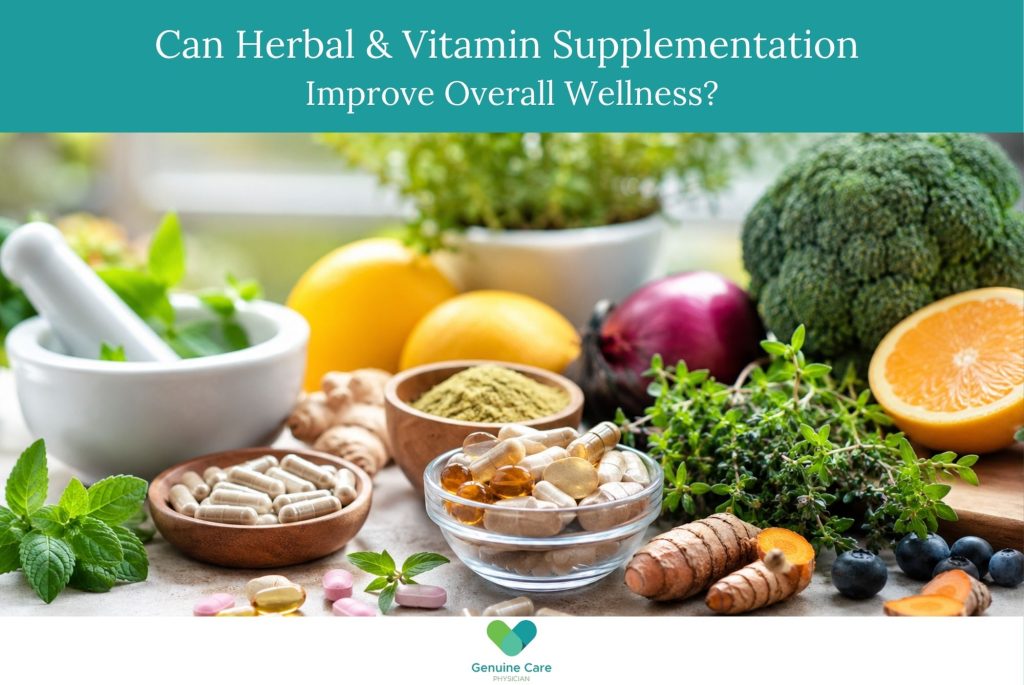
Maintaining optimal health requires more than simply treating illness—it involves supporting the body’s natural ability to function at its best. While a balanced diet, regular exercise, quality sleep, and stress management remain the foundation of good health, many individuals wonder whether herbal remedies and vitamin supplements can further improve their overall wellness.
The answer is that they can—but only when used appropriately and under the guidance of a qualified healthcare provider.
At Genuine Care Physician in Forest Hills, NY, we believe in a personalized approach to wellness. We help patients understand which supplements may be beneficial based on their unique health needs, lifestyle, medical history, and nutritional status while ensuring they complement—not replace—a healthy lifestyle and evidence-based medical care.
Understanding Herbal and Vitamin Supplementation
Vitamin and herbal supplements are products designed to provide nutrients or plant-based compounds that may support normal body functions. They come in many forms, including capsules, tablets, powders, gummies, teas, and liquid extracts.
Common vitamin supplements include:
- Vitamin D
- Vitamin C
- Vitamin B12
- Calcium
- Magnesium
- Iron
- Zinc
- Omega-3 fatty acids
Popular herbal supplements include:
- Turmeric
- Ashwagandha
- Echinacea
- Ginger
- Ginseng
- Elderberry
- Milk Thistle
- Garlic
While many of these supplements have been studied for potential health benefits, they should always be selected based on individual needs rather than trends or marketing claims.
Potential Benefits of Vitamin Supplementation
Filling Nutritional Gaps
Even individuals who eat relatively healthy diets may have nutrient deficiencies due to:
- Busy lifestyles
- Restricted diets
- Food allergies
- Aging
- Pregnancy
- Digestive disorders
- Certain medications
Vitamin supplementation may help restore healthy nutrient levels when deficiencies are identified.
Supporting Immune Function
Several vitamins and minerals contribute to normal immune system function, including:
- Vitamin C
- Vitamin D
- Zinc
- Selenium
Individuals with deficiencies may experience improved immune support after appropriate supplementation.
Promoting Bone Health
Vitamin D and calcium work together to support:
- Bone strength
- Muscle function
- Healthy aging
Older adults and individuals with limited sun exposure often benefit from physician-guided supplementation.
Supporting Energy Production
B vitamins help convert food into energy and support healthy nervous system function.
Low B12 levels, especially among vegetarians, vegans, or older adults, may contribute to fatigue and neurological symptoms.
Potential Benefits of Herbal Supplements
Herbal remedies have been used in traditional medicine for centuries. Today, researchers continue studying their potential role in supporting wellness.
Turmeric
Contains curcumin, a compound known for its antioxidant and anti-inflammatory properties.
Ashwagandha
May help support healthy stress responses and promote overall well-being in some individuals.
Ginger
Often used to support digestion and reduce occasional nausea.
Garlic
May support cardiovascular health as part of a heart-healthy lifestyle.
Elderberry
Frequently used during cold and flu season to support immune health.
While promising, herbal supplements should not replace medical treatments for chronic or serious illnesses.
Can Supplements Prevent Disease?
No supplement can guarantee disease prevention.
Research suggests certain vitamins and nutrients may reduce health risks in people with documented deficiencies, but supplements are not substitutes for:
- Healthy eating
- Exercise
- Preventive screenings
- Regular medical care
- Prescription medications when needed
Overall wellness comes from combining healthy habits with individualized healthcare.
The Importance of Personalized Supplement Recommendations
Not everyone needs the same vitamins or herbs.
Factors that influence supplementation include:
- Age
- Gender
- Medical history
- Existing health conditions
- Prescription medications
- Diet
- Laboratory results
- Pregnancy status
Taking unnecessary supplements may offer little benefit and could even pose health risks.
Can Supplements Interact with Medications?
Yes.
Many people are surprised to learn that herbal products and vitamins can interact with prescription medications.
Examples include:
- St. John’s Wort affecting antidepressants and birth control pills
- Vitamin K interfering with blood thinners
- Ginkgo increasing bleeding risk
- High-dose vitamin A causing toxicity
- Excess iron causing digestive problems in individuals without deficiency
This is why discussing supplements with your physician is essential.
Are Natural Products Always Safe?
No.
“Natural” does not automatically mean safe.
Some supplements may:
- Cause allergic reactions
- Interact with medications
- Affect liver function
- Raise blood pressure
- Increase bleeding risk
- Be unsafe during pregnancy
Quality also varies among manufacturers.
Choosing reputable, physician-recommended products helps reduce these risks.
Signs You May Benefit from a Medical Evaluation Before Starting Supplements
Consider speaking with your healthcare provider if you experience:
- Persistent fatigue
- Frequent illness
- Hair loss
- Brittle nails
- Muscle weakness
- Bone pain
- Digestive problems
- Memory concerns
- Tingling or numbness
Laboratory testing may identify nutritional deficiencies requiring targeted treatment.
Lifestyle Still Comes First
Supplements work best alongside healthy daily habits.
For optimal wellness, focus on:
- Eating a nutrient-rich diet
- Staying physically active
- Sleeping 7–9 hours nightly
- Managing stress
- Drinking adequate water
- Avoiding tobacco
- Limiting alcohol
- Staying current with preventive healthcare
These habits provide the strongest foundation for lifelong health.
How Genuine Care Physician Can Help
At Genuine Care Physician, we provide comprehensive, patient-centered care that focuses on prevention, wellness, and personalized treatment plans.
Our healthcare team can:
- Evaluate potential vitamin deficiencies
- Review your current supplements
- Identify possible medication interactions
- Recommend evidence-based supplementation
- Monitor your overall health
- Develop individualized wellness plans
- Provide preventive care and routine screenings
We believe informed decisions lead to healthier lives.
Frequently Asked Questions (Q&A)
Can vitamins improve my energy?
If fatigue is caused by a vitamin deficiency—such as low vitamin B12, iron, or vitamin D—appropriate supplementation may improve energy levels. Otherwise, vitamins are unlikely to increase energy beyond normal healthy function.
Should everyone take a multivitamin?
Not necessarily. Many people obtain adequate nutrients through a balanced diet. Your physician can help determine whether supplementation is appropriate for you.
Are herbal supplements regulated?
Dietary supplements are regulated differently than prescription medications. Product quality and ingredient consistency may vary, making it important to choose reputable brands.
Can I take vitamins with prescription medications?
Some supplements can interact with medications. Always consult your healthcare provider before combining supplements with prescription drugs.
Is vitamin D important?
Yes. Vitamin D supports bone health, immune function, and muscle health. Many adults have insufficient levels and may benefit from testing.
Can supplements replace healthy eating?
No. Supplements are designed to complement—not replace—a nutritious diet and healthy lifestyle.
Are herbal supplements safe during pregnancy?
Not always. Many herbs have not been adequately studied during pregnancy and should only be used under medical supervision.
How do I know if I have a vitamin deficiency?
Blood tests, a medical evaluation, and a review of your symptoms can help identify deficiencies and determine whether supplementation is needed.
What is the best supplement for immune health?
There is no single “best” supplement. Maintaining adequate levels of nutrients like vitamin D, vitamin C, and zinc—when appropriate—may support normal immune function alongside healthy lifestyle habits.
When should I speak with my doctor before taking supplements?
You should consult your physician if you are pregnant, breastfeeding, managing chronic conditions, taking prescription medications, or considering high-dose vitamins or herbal products.
Contact Genuine Care Physician
Genuine Care Physician
102-55 63rd Road
Forest Hills, NY 11375
Phone: (516) 262-3612
Website: https://genuinecarephysician.com/